原爆なかった論の戯言:広島は偵察だけで攻撃はしなかった、8月6日まではの続きです。
この記事の三行要約
- Palmer・林は、広島・長崎の原爆投下そのものを否定し、通常爆薬・ナパーム・毒ガス等による大規模な「複合攻撃/偽装工作」だったと主張している。
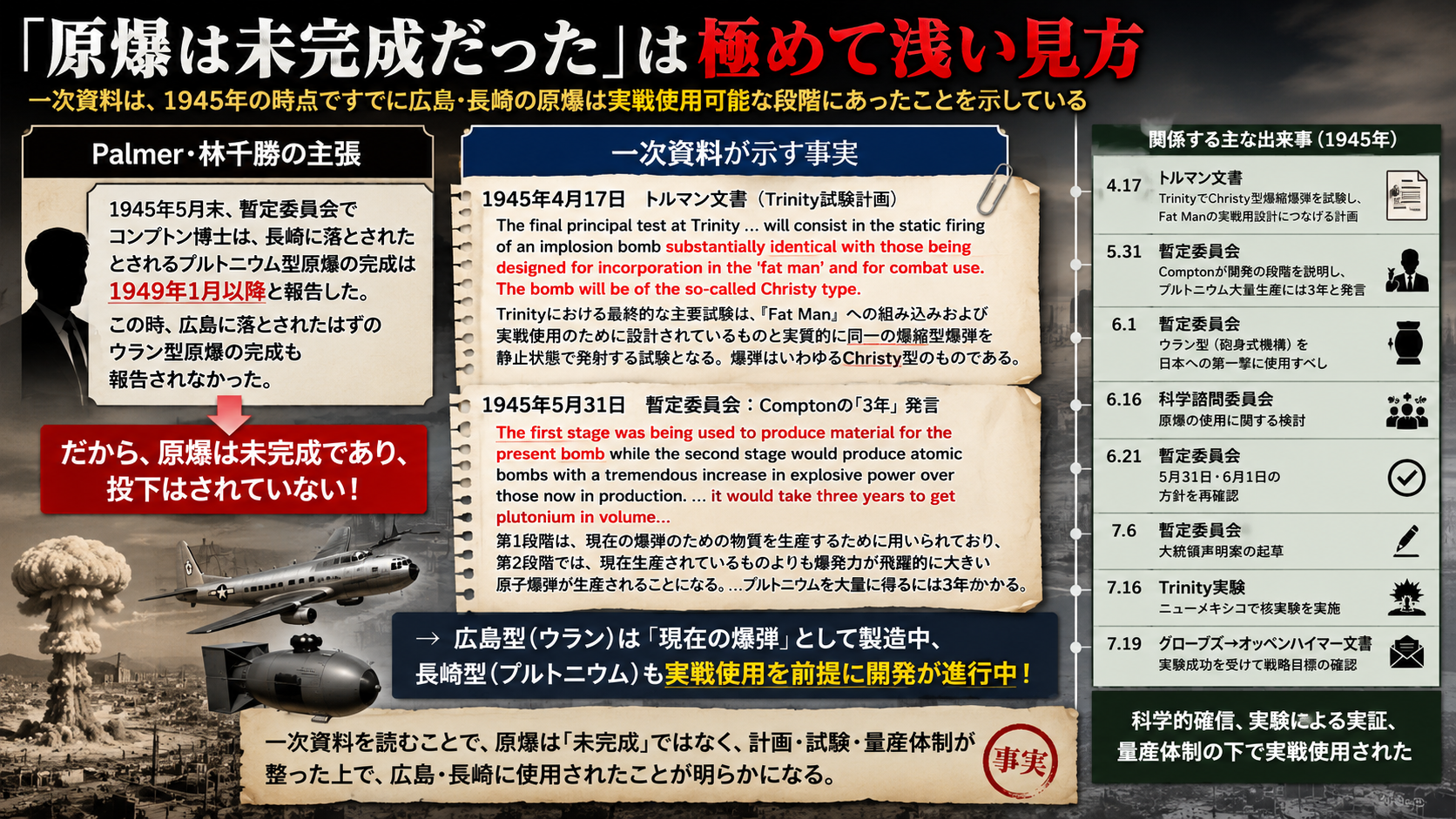
- その重要な根拠としてComptonの1945年5月31日の発言を利用し、特にプルトニウムの大量生産には数年かかるという部分から、長崎型原爆の1945年完成を否定する。
- しかし一次資料では、4月17日の時点ですでにプルトニウム爆縮型の具体的開発が進み、Christy型をTrinityで試験し、Fat Manの実戦用設計と実質的に同一とする計画が存在していた。
Palmerも林千勝も「原爆は未完成だった」という主張のようです。Palmerは、次に示す1945年5月31日の暫定委員会でのCompton発言を引用しています。
私はまだ林の著作を読んでないのですが、こちらに要約がありますね。こうあります。
「原爆完成は数年先」という衝撃の報告がなされていたことである。すなわち1945年5月末、アメリカにおける原爆問題に関する最高諮問会議である「暫定委員会」で、アーサー・コンプトン博士は、長崎に落とされたとされるプルトニウム型原爆の完成は1949年1月以降と報告した。この時広島に落とされたはずのウラン型原爆の完成も報告されなかった。
まるでウソです。コンプトンはそんなこと言ってません。1945年5月31日の一次資料をお読みください。
とりあえず、以下では関係しそうな一次資料を集めておきます。Palmer及び林の説については、今後批判していこうと思います。
- 1945年4月17日――トルマン文書
- 1945年4月23日――グローブズメモ
- 1945年5月31日――暫定委員会:Comptonの「3年」
- 1945年6月1日――暫定委員会:ウラン型(砲身式機構)を日本への第一撃に使用すべし
- 1945年6月16日――科学諮問委員会
- 1945年6月21日――暫定委員会:5月31日・6月1日の方針を再確認
- 1945年7月6日――暫定委員会:大統領声明案の起草
- 1945年7月16日 Trinity実験
- 1945年7月19日 グローブズ→オッペンハイマー文書
- 1945年7月24日 トルマン会議メモ
- 1945年7月24日 グローブズ→マーシャル文書
- 1945年7月26日 原爆使用命令を航空軍に伝達
1945年4月17日――トルマン文書
PDF1ページ
In contrast to the case of the gun assembly type bomb, such a proof firing is regarded as necessary in the case of an implosion bomb in view of the present unavoidable uncertainties as to the behaviour of the implosion process. If the nuclear reaction set off by the implosion does not result in a satisfactory high order nuclear explosion, the test will be important in diagnosing the cause of the trouble and in suggesting necessary modifications in design.
砲身式爆弾(※広島型ウラン235)の場合とは対照的に、爆縮型爆弾(※長崎型プルトニウム)の場合には、爆縮過程の挙動について現在なお避けられない不確実性があるため、このような実証試験(proof firing)が必要と考えられている。爆縮によって引き起こされた核反応が、十分な規模の核爆発に至らなかった場合でも、この試験は、その問題の原因を診断し、設計上必要な修正を示唆するうえで重要となる。」
(略)
The results of the Trinity firing will of course be correlated with the studies of the implosion process being made at Los Alamos…
もちろん、Trinityでの発射試験の結果は、Los Alamosで行われている爆縮過程の研究と照合されることになる。」
PDF2ページ
The final principal test at Trinity … will consist in the static firing of an implosion bomb substantially identical with those being designed for incorporation in the ‘fat man’ and for combat use. The bomb will be of the so-called Christy type.
Trinityにおける最終的な主要試験は、『Fat Man(※長崎型)』への組み込みおよび実戦使用のために設計されているものと実質的に同一の爆縮型爆弾を静止状態で発射する試験となる。爆弾はいわゆるChristy型のものである。
プルトニウム爆弾について複数の爆縮方式が検討され、その中からChristyの提案した固体コア方式(Christy design)が採用され、Trinityで実爆発試験され、Fat Manの実戦用設計につながった
PDF12ページ
If the bomb fails to detonate high order, it will be necessary to have extremely good information as to its actual behaviour in order to introduce modifications which will lead to a successful design. The need for a successful implosion design is a real one. We can no longer regard the implosion type of bomb as merely an alternate to the gun type since we now know that the latter cannot be used with Pu manufactured at Hanford. To assure the necessary information, a very considerable number of measurements of implosive and nuclear behaviour must be made…
もし爆弾が十分な規模での爆発に失敗した場合、成功する設計につながる改良を加えるためには、その実際の挙動について極めて良好な情報を得る必要がある。成功する爆縮設計の必要性は現実のものである。現在では、爆縮型爆弾を単なる砲身式爆弾の代替とみなすことはできない。なぜなら、Hanfordで製造されるPu(プルトニウム)には後者[砲身式]を使用できないことが分かっているからである。必要な情報を確保するためには、爆縮および核反応の挙動について、非常に多数の測定を行わなければならない。
PDF13ページ
If the bomb does detonate high order, we shall still be interested in its implosive and nuclear behaviour. As a prognosis, I agree with those associated with the program that the proposed tests will come off approximately on schedule.
もし爆弾が十分な規模で爆発した場合でも、われわれは引き続き、その爆縮および核反応の挙動に関心を持つことになる。予測として、私はこの計画に関係する者たちと同様、予定された試験はおおむねスケジュールどおり実施されるだろうと考えている。
1945年4月23日――グローブズメモ
一次資料:Memorandum for the Secretary of War from General L. R. Groves, “Atomic Fission Bombs,” April 23, 1945 、文字起こし版
マンハッタン計画の最高責任者レスリー・グローヴズが、陸軍長官スティムソンに対して、1945年4月23日時点の原爆開発状況・完成見込み・使用計画を報告した内部メモ。
P1:Each bomb is estimated to have the equivalent effect of from 5,000 to 20,000 tons of TNT now, and ultimately, possibly as much as 100,000 tons.
各爆弾の威力は現在のところ5,000~20,000トンのTNT相当、将来的には10万トンに達する可能性がある。
P6:Our operation plans are based on the gun type bomb, the first of which, without previous full scale test (and we do not believe this will be necessary), should be ready about 1 August 1945. The second one should be ready before the end of the year and succeeding ones at approximately sixty day intervals thereafter.
我々の作戦計画はガン方式爆弾(※ウラン、広島型)を基礎としている。この爆弾の第1号は、事前に実物大の試験を行うことなく(そして、我々はそのような試験は必要ないと考えている)、1945年8月1日頃には完成する予定である。第2号は年末までに完成する予定であり、その後のものはおよそ60日間隔で製造される予定である。
Our previous hopes that an implosion type of bomb might be developed in the late spring of 1945 have now been dissipated by scientific difficulties which we have not as yet been able to solve. The effects of these difficulties are that the bomb will require more material and we will get less explosive effect per pound of weight. We should have sufficient material for the first implosion type bomb to be tested in the United States in the early part of July. A second test, if necessary, can be held by the 1st of August and if our scientific progress continues as expected we should be prepared to drop one of these bombs every ten days starting the latter part of August.
我々は以前、1945年の晩春には爆縮方式(※プルトニウム、長崎型)の爆弾を開発できるかもしれないと期待していた。しかし現在、その期待は、我々がいまだ解決できていない科学的な困難によって打ち砕かれている。これらの困難の結果、爆弾にはより多くの物質が必要となり、重量1ポンド当たりの爆発効果は小さくなる。しかし、我々は最初の爆縮方式爆弾を米国内で試験するために十分な物質を、7月初めには確保できる見込みである。必要であれば、第2回の試験を8月1日までに実施することができる。そして、我々の科学的進展が予想どおり続けば、8月後半から10日ごとにこれらの爆弾を1発ずつ投下できる態勢が整うはずである。
While our plan of operations is based on the more certain, more powerful, gun type bomb, it also provides for the use of the implosion type bombs as soon as they become available. The target is and was always expected to be Japan. A composite group of the 20th Air Force has been organized and specially trained and equipped. The initial echelons are about to leave for the overseas base.
我々の作戦計画は、より確実で、より強力なガン方式爆弾を基礎としているが、同時に、爆縮方式爆弾が使用可能になり次第、それらを使用することも計画に含めている。標的は日本であり、当初から常に日本が想定されていた。第20航空軍の部隊を組み合わせた特別編成部隊が組織され、特別な訓練と装備が施されている。その先遣部隊は、まもなく海外の基地へ向けて出発するところである。
1945年5月31日――暫定委員会:Comptonの「3年」
一次資料:Notes of the Interim Committee Meeting, May 31, 1945、PDFの3,4ページ目
Dr. A. H. Compton explained the various stages of development. The first stage involved the separation of uranium 235. The second stage involved the use of “breeder” piles to produce enriched materials from which plutonium or new types of uranium could be obtained. The first stage was being used to produce material for the present bomb while the second stage would produce atomic bombs with a tremendous increase in explosive power over those now in production. Production of enriched materials was now on the order of pounds or hundreds of pounds and it was contemplated that the scale of operations could be expanded sufficiently to produce many tons. While bombs produced from the products of the second stage had not yet been proven in actual operation, such bombs were considered a scientific certainty. It was estimated that from January 1946 it would take one and one-half years to prove this second stage in view of certain technical and metallurgical difficulties, that it would take three years to get plutonium in volume, and that it would take perhaps six years for any competitor to catch up with us.
A・H・コンプトン博士は、開発のさまざまな段階について説明した。第1段階は、ウラン235の分離に関するものである。第2段階は、「ブリーダー」炉を用いて、プルトニウムまたは新しい種類のウランを得ることのできる濃縮物質を生産することに関するものである。第1段階は、現在の爆弾のための物質を生産するために用いられており、一方、第2段階では、現在生産されているものよりも爆発力が飛躍的に大きい原子爆弾が生産されることになる。濃縮物質の生産量は現在、数ポンドないし数百ポンド程度であり、その規模を十分に拡大して何トンも生産できるようにすることが想定されていた。第2段階の産物から作られる爆弾については、まだ実際の作戦で実証されてはいなかったが、そのような爆弾は科学的には確実なものと考えられていた。1946年1月から数えて、一定の技術的・冶金学的困難があるため、この第2段階を実証するには1年半かかると見積もられていた。また、プルトニウムを大量に得るには3年かかり、競争相手が我々に追いつくには、おそらく6年かかると見積もられていた。
第1段階とはウラン235(広島型)の生産であり、第2段階とはプルトニウム(長崎型)等です。
「第1段階は、現在の爆弾のための物質を生産するために用いられている」 とある通り、この時点で広島型原爆製造中であると解釈するのが自然でしょう。「第2段階の産物から作られる爆弾は、まだ実際の作戦で実証されていない」とありますが、当然ですが、これは実験をしていないという意味ですね。
さらに、「プルトニウムを大量に得るには3年かかる(it would take three years to get plutonium in volume)」と言っているわけで、これはプルトニウムを得るには3年ではなく、「大量に得るには3年」」です。
ともあれ、この部分のみで「原爆が未完成」という解釈はできないはずです。
1945年6月1日――暫定委員会:ウラン型(砲身式機構)を日本への第一撃に使用すべし
一次資料:Notes of the Interim Committee Meeting, June 1, 1945、PDFの8ページ終盤から9ページ最初
Mr. Byrnes recommended, and the Committee agreed, that the Secretary of War should be advised that, while recognizing that the final selection of the target was essentially a military decision, the present view of the Committee was that the bomb should be used against Japan as soon as possible; that it be used on a war plant surrounded by workers’ homes; and that it be used without prior warning. It was the understanding of the Committee that the small bomb would be used in the test and that the large bomb (gun mechanism) would be used in the first strike over Japan.
バーンズ氏は、最終的な標的の選定は本質的に軍事上の決定であることを認めたうえで、陸軍長官に対し、委員会の現在の見解として、原爆はできるだけ早く日本に対して使用すべきであり、労働者の住宅に囲まれた軍需工場を標的とし、事前の警告なしに使用すべきである、と伝えることを提案した。委員会はこれに同意した。委員会の理解では、小型爆弾は試験に使用され、大型爆弾(砲身式機構)は日本に対する最初の攻撃に使用されることになっていた。
重要な点として、「大型爆弾(砲身式機構)」と明記され、それを可能な限り早く(as soon as possible)、日本に対して使うというのが委員会の認識です。「将来、原爆が完成したら使う」という話ではありません。「砲身式機構」とは、核物質を砲身式に組み合わせる方式、すなわちウラン235を使用するLittle Boy型の方式です。
一方、6月1日の段階で「試験」に使用されるとされている「小型爆弾」は、後にTrinityで実験されるプルトニウム爆縮型につながります。
つまり、5/31のCompton発言の翌日には、ウラン型を日本への第一撃に使用するという認識が委員会にあったことを示しているわけです。
1945年6月16日――科学諮問委員会
ここは厳密には「暫定委員会そのもの」ではなく、暫定委員会の科学諮問委員会です。
メンバーは、Arthur Compton、Ernest Lawrence、J. Robert Oppenheimer、Enrico Fermi。
To accomplish these aims we recommend that before the weapons are used not only Britain, but also Russia, France, and China be advised that we have made considerable progress in our work on atomic weapons, that these may be ready to use during the present war, and that we would welcome suggestions as to how we can cooperate in making this development contribute to improved international relations.
これらの目的を達成するため、我々は、兵器が使用される前に、英国だけでなく、ソ連、フランス、中国にも、我々が原子兵器の研究において相当な進展を遂げており、これらが現在の戦争中に使用可能になる可能性があることを伝えることを勧告する。また、この開発を国際関係の改善に役立てるために、どのように協力できるかについて提案を歓迎する。
つまり科学者たちは、この戦争で原爆が使用可能になることを前提として議論しています。「完成まで数年かかるので1945年の使用は不可能」という認識ではありません。
“Those who advocate a purely technical demonstration would wish to outlaw the use of atomic weapons, and have feared that if we use the weapons now our position in future negotiations will be prejudiced. Others emphasize the opportunity of saving American lives by immediate military use, and believe that such use will improve the international prospects, in that they are more concerned with the prevention of war than with the elimination of this specific weapon. We find ourselves closer to these latter views; we can propose no technical demonstration likely to bring an end to the war; we see no acceptable alternative to direct military use.”
「純粋な技術的デモンストレーションを支持する者たちは、原子兵器の使用を禁止したいと考えており、もし今この兵器を使用すれば、将来の交渉における我々の立場が損なわれることを懸念している。これに対して別の者たちは、直ちに軍事使用することによってアメリカ人の生命を救える機会を重視し、そのような使用は国際的な見通しを改善すると考えている。彼らは、この特定の兵器を排除することよりも、戦争そのものを防止することを重視しているからである。我々は後者の見解により近い。我々は、戦争を終結させる可能性のある技術的デモを提案することはできない。我々は、直接的な軍事使用に代わる受け入れ可能な選択肢を見いだせない。」
ここでも、明確に、原爆が近い将来実際に使用可能になるという前提と言えます。
1945年6月21日――暫定委員会:5月31日・6月1日の方針を再確認
一次資料:Notes of the Interim Committee Meeting, June 21, 1945、PDFの6,7ページ
Mr. Harrison explained that he had recently received through Dr. A. H. Compton a report from a group of the scientists at Chicago recommending, among other things, that the weapon not be used in this war but that a purely technical test be conducted which would be made known to other countries. Mr. Harrison had turned this report over to the Scientific Panel for study and recommendation. Part II of the report of the Scientific Panel stated that they saw no acceptable alternative to direct military use.
ハリソン氏は、A・H・コンプトン博士を通じて、シカゴの科学者グループから報告書を最近受け取ったと説明した。その報告書は、とりわけ、この戦争では兵器を使用せず、他国にも知らせる純粋な技術的実験を実施することを勧告していた。ハリソン氏は、この報告書を検討と勧告のため科学諮問委員会に回していた。科学諮問委員会の報告書第II部では、直接的な軍事使用に代わる受け入れ可能な選択肢はない、としていた。
そして、今回の核心部分が続きます。
The Committee reaffirmed the position taken at the 31 May and 1 June meetings that the weapon be used against Japan at the earliest opportunity, that it be used without warning, and that it be used on a dual target, namely, a military installation or war plant surrounded by or adjacent to homes or other buildings most susceptible to damage.
委員会は、5月31日および6月1日の会合で示された立場、すなわち、この兵器を日本に対して最も早い機会に使用し、警告なしに使用し、さらに二重の標的、すなわち、住宅その他の被害を受けやすい建物に囲まれている、またはそれらに隣接している軍事施設または軍需工場を標的として使用する、という立場を再確認した。
これまでの流れから、少なくとも広島型(ウラン235)の原爆が未完成というふうには読めませんね。長崎型(プルトニウム)については、単に「大量生産には3年かかる」と言ってるだけです。
1945年7月6日――暫定委員会:大統領声明案の起草
一次資料:Notes of the Interim Committee Meeting, July 6, 1945
原爆使用後に大統領が発する声明案を議論したようです。実際に出された声明(1945/8/6広島投下後)は、次のようなものです。
“With this bomb we have now added a new and revolutionary increase in destruction to supplement the growing power of our armed forces.”
「この爆弾によって、われわれは今や、増大しつつあるわが軍の破壊力を補う、新しく革命的な破壊力の増大を加えた。」
“In their present form these bombs are now in production and even more powerful forms are in development.”
「現在の形のこれらの爆弾は、すでに生産中であり、さらに強力な型も開発中である。」
1945年7月16日 Trinity実験
世界初の核爆発実験で、プルトニウム(長崎型)の爆縮型原爆ですね。AIは次のように解説します。
理由は、爆縮式プルトニウム爆弾には大きな技術的不確実性があったからです。プルトニウムは、当初想定していたよりも速い中性子放出の問題があり、単純な砲身式では安全に核爆発を起こすことが難しいことが判明しました。そこで、「プルトニウムを爆縮して一気に超臨界状態にする」という方式に重点が移りました。
ところがこれは非常に難しい。爆薬の爆発が少しでも不均衡になると、プルトニウムが完全に圧縮されず、核爆発にならずに終わる(fizzle)可能性がありました。
そのため、実際にフルサイズの装置を爆発させて確認する必要があったのです。Los Alamosの研究資料も、Trinityの主要目的を、収束する爆縮によって未臨界量のプルトニウムを臨界状態にすることの実証と説明しています。
広島型(ウラン235)が試験されなかった理由をAIはこうまとめました。
簡単に言えば、「試験に使うほどU-235に余裕はない。しかし設計には十分な自信があるので、試験なしで実戦使用する」。
1. 砲身式は構造が比較的単純だった
Little Boyは、2つの未臨界のU-235を高速で組み合わせるgun-type(砲身式)でした。爆縮型のように、何十個もの成形爆薬を極めて正確に同時爆発させて、プルトニウムを完全に対称に圧縮する必要がありません。
そのため、マンハッタン計画側は、個々の部品や機構を試験すれば、核爆発そのものを実施しなくても動作をかなり確信できると判断しました。米国国立公園局も「ウラン型のフィールドテストによって設計への疑念が減り、実戦使用前のフルスケール試験は不要と判断された」と説明しています。
2. U-235が極端に貴重だった
これが非常に大きな理由です。Little Boy 1発には大量の濃縮U-235が必要でした。一方、当時の濃縮能力は限られていました。つまり、「試験用に1発使ってしまえば、実戦用の1発がなくなる」という問題がありました。
1945年7月19日 グローブズ→オッペンハイマー文書
7/19には委員会会合もありましたが、より重要なのはこの文書です。
一次資料:Message from Groves to Oppenheimer, July 19, 1945
ちなみに、
- グローブズ: 軍事・行政・予算・施設・調達・工程・安全保障・実戦投入などを統括
- オッペンハイマー:ロスアラモス研究所の所長として、科学・技術面の責任者
原爆開発計画の軍側トップから、科学・技術側トップへの正式な指示・回答と見るべき文書です。
Dear Dr. Oppenheimer:
I have received your teletype dtd July 19, 1945, and have discussed its contents with some of our Washington associates. Factors beyond our control prevent us from considering any decision other than to proceed according to existing schedules for the time being.
It is necessary to drop the first Little Boy and the first Fat Man and probably a second one in accordance with our original plan. It may be that as many as three of the latter in their best present condition may have to be dropped to conform with planned strategic operations.
オッペンハイマー博士
1945年7月19日付のあなたのテレタイプ通信を受け取り、その内容についてワシントンの関係者数名と協議しました。われわれにはコントロールできない要因があるため、当面は既存のスケジュールに従って進める以外の決定は検討できません。
当初の計画に従って、最初のLittle Boy(※広島型)と最初のFat Man(※長崎型)、そしておそらく2発目のFat Manも投下する必要があります。さらに、計画されている戦略的作戦に合わせるため、後者(Fat Man)は現在の最良の状態にあるものを最大3発まで投下しなければならない可能性があります。
これに先立つオッペンハイマーからグローブズへの電報は未だに機密とされているのですが、要するに「Little Boy用として予定されていた濃縮ウランを別の兵器設計に振り向ける案」をグローブズに提示したということのようです。
これはもはや、Little Boyが「将来完成するかもしれない兵器」という抽象的存在ではないことを示していますね。
1945年7月24日 トルマン会議メモ
一次資料:Notes taken in Chicago July 24th, 1944. Meeting Between Gen. Groves, Dr. Oppenheimer, and Dr. Tolman
PDF5ページ
15 kilotons anticipated at 1850 feet
1,850フィートで15キロトンが予想される。destruction of industrial areas would require a lower blast elevation at 1400 feet.
工業地域を破壊するには、爆発高度を1,400フィートまで低くする必要がある。
「核兵器の将来研究」ではなく、実際の兵器の威力・爆発高度・使用効果まで検討しているわけですね。
1945年7月24日 グローブズ→マーシャル文書
PDFの1ページ
1. First Operation. The first gun-type, atomic fission bomb should be ready to take off from the base at Tinian between 1 August and 10 August 1945. As soon after the readiness date as the weather is suitable, the bomb will be delivered on a target in Japan by a specially modified B-29 airplane of the 509th Composite Group, 20th Air Force. The explosive effect is now expected to exceed that of 10,000 tons of TNT and can well be as much as 30,000.
1. 最初の作戦。最初の砲身式原子核分裂爆弾は、1945年8月1日から8月10日の間に、テニアン基地から出撃できる状態になるはずである。準備完了日以降、天候が適切になり次第、その爆弾は、第20航空軍第509混成群団の特別改造B-29によって、日本の目標に投下される。現在予想されている爆発効果は、TNT 1万トンを超え、3万トンに達する可能性も十分にある。2. Assembly. The bomb will be finally assembled at Tinian by a special technical group of civilian and military scientific personnel from the project.
2. 組立。爆弾は、計画に参加している民間および軍の科学技術要員からなる特別技術班によって、テニアンで最終的に組み立てられる。3. Targets. At least three targets should be available. Hiroshima, Kokura and Niigata have been reserved as targets for the first bombs. Niigata is the most unfavorable because of its location on the far side of Japan. The targets provide sufficient geographical spread to insure, as far as possible, that weather closure after the take-off of the airplane cannot prevent delivery of the bomb. Detailed information on the three targets is shown in Tab “A”.
3. 目標。少なくとも3つの目標を使用可能な状態にしておくべきである。広島、小倉、新潟が、最初の爆弾の目標として確保されている。新潟は、日本の遠い側に位置しているため、最も不利な目標である。これらの目標は十分に地理的に分散しているため、可能な限り、航空機の離陸後に天候によって接近が妨げられた場合でも、爆弾の投下ができなくなることを防げるようになっている。3つの目標に関する詳細な情報は、別紙「A」に示されている。
1945年7月26日 原爆使用命令を航空軍に伝達
一時資料:General Thomas T. Handy to General Carl Spaatz, July 26, 1945, Top Secret
※実際の命令は25日です。この経緯は以下。
| 日付 | 文書 | 内容 |
|---|---|---|
| 7月22日 | Marshall → Handy | 原爆使用に関する指令案を作成するよう指示 |
| 7月24日 | Handy → Marshall | Grovesが作成した指令案を送付 |
| 7月25日 | Marshall → Handy | Stimsonが変更なしで承認したことを通知 |
| 7月25日 | Handy → Spaatz | 実際の原爆使用指令を発出 |
| 7月26日 | — | National Security Archiveでは、この文書を「July 26」として掲載 |
The 509 Composite Group, 20th Air Force will deliver its first special bomb as soon as weather will permit visual bombing after about 3 August 1945 on one of the targets Hiroshima, Kokura, Niigata and Nagasaki.
第20航空軍第509混成群団は、1945年8月3日頃以降、天候が目視爆撃を可能にし次第、最初の特殊爆弾を投下する。対象は、広島、小倉、新潟、長崎のいずれかである。
The foregoing directive is issued to you by direction and with the approval of the Secretary of War and of the Chief of Staff, USA.
これは陸軍長官と陸軍参謀総長の承認を得た正式な実行指令である。
そして、この文書には「copy for General Gloves」とあり、この命令が即座にグローブズにも伝えられたことがわかります。
続きは、原爆なかった論の戯言:原爆ではなく、Palmer(林)の主張こそが完全なフィクション
コメント